carving the wedge just-so allows for a subtle curve that sets easier beneath the thumb, making for a crisper "snap" at the moment of use, which is key—that's most of what you're going for here, because although it carries with it specifically spiritual properties, the ritual of the sound is what we've worked even harder to ingrain into them. the sound is devastating to them, because it means, "lo, holy work can begin." there used to be words for this, for how the mind could be seduced so easily by sound.
we use soapstone because of its abundance (rendering it easy to obtain in many locales), and for the distinctively soft sounds it makes when broken. there is no confusing it for branch-break, footfall in loam, or patter of displaced rubble. it also yields easily to the blade, specifically of our design, making it easier for one to render dozens from a fist-sized block in a handful of time. the stones are important, but never lose your blade.
after the trance, or as the sound begins to settle in their dome, the stones have done their work and it is time for you to settle into your clerical role. if not already, the beltloops on your left leg must be tightened, prohibiting "jumps", and protecting the spiritual mound, which you will then uncover with the removal of your left glove. you know the prayers, but maybe you have forgotten their significance—how long has it been since you were dipped in the river of the alder's glade? the finger, our spiritual mound, is our ear to the maker's wish. so long as we keep it, we are bound to his will and cannot turn from it.
with the spiritual mound, draw the lingua rasa before the entranced and lay them lengthwise across. in time, you will come to understand the greater conceits behind this, but for now it suffices that you do this work for those envenomed in soul and bear your work out with honesty and love.
anyway, i've finished roasting the fish, so let's eat.

Wednesday, May 20, 2020

Monday, February 17, 2020
Transmission 404E83
SE: Elzéard
Dispatch: 83
Province: Califo-Septentrional
BEGIN DISPATCH:
Gibdo: It's not that I'm not afraid of ghosts, but I'm not afraid of them. (emphasis mine)
Elzéard: Who are they?
G: I don't know, I never leave my bed. I usually retreat.. go away.. into my bed.
E: What do you mean?
G: Ever since I was small, I've had this idea, that when I am scared of something, the blankets on my bed will form a gigantic cave, and I'll shrink to the size just smaller than some of my dolls, who would guard it inside and out. There would be a little fire there, a campfire, orange, and I'd sit there and wait out whatever I feared.
E: Interesting.
G: I still think about that, often. Whenever I face a sleep paralysis or have some bigger fear, I just think about the flames of that fire. They whistle, or wh-.. wh-? Whimper? No, they whisper.. wh-.. it's very soothing.
E: So you retreat when you hear.. "them"?
G: No, I have no need to, because I don't feel fear when I hear them. I merely hear them. Sometimes, I'm, I'm, ... revitalized.
E: What do you mean, revitalized?
G: Well, maybe it's more that it awakens me. If I was tired or just drifting off when it happens, this will tend to enliven me. I'll feel an energy or restlessness in me. Almost like I want to get out of bed, join them.
E: Join them?
G: Sorta.. I guess what I mean, what I mean is that I want to get up and walk around, run up and down the stairs like them, expend some of this.. this energy, get it out so I can sleep. I become very focused on this, "what should I do, should I go out and join them? Maybe then I will be tired." That sort of thing.
E: So they're moving around then, up and down the stairs. Are they saying anything, too? Can you pick out how many of them there are?
G: No, no, nothing like that. If anything it could be one, doing everything. Or else they take turns. But I never hear anything, no breathing or talking I mean. Just their feet.
E: You say "feet." Do you mean "shoes"?
G: Hm... No, it's not shoes. It's feet. And the sound of the steps and the floor being "hit."
E: And they just go back and forth?
G: Sure. Yeah, I think. Well, actually, there might be more than one. I hear one set of stairs escalated, then the same set again, also escalated, without any descending steps, so maybe?
E: What do you think it is?
G: I'm not sure. Ghosts. But I fear ghosts. I'm not sure.
NOTE:
- califo-septentrional, district of sandeman, alderman judit, commune dzjah
- west-facing, two stories, basement (three antechambers), sub-base (two antechambers), open quadrilateral stair-stack, G localized in second story, bed facing southerly wall, blade-pane windows west/east, assorted bibelots
- nine inhabitants incl. G, eight family, one vagrant-jubilee
- sounds only heard to G, vagrant-jubilee testimony null in accordance to sacrament
- routine climate fluctuating between 88-91 fahrenheit
- dust clime, volume-4, seemingly average
- last family loss some nine moons prior
- five suns until next moon, soapstone to be carved during observation
:END NOTE
:END DISPATCH
Wednesday, January 1, 2020
Material Goods I Consumed for the Better in 2019: The Books
if i'm the first to greet you to this new age, hello and welcome to 2020. this year, like many and all before it, shall certainly bring with it its own wretched cornucopia of uncertainties and grim-dark, bad-butt whatever-the-hecks. but i also know that there will be an understated and unreported confluence of Good and Wonder that will continue its silent march through the fog. here are some that i found last year.

 i did not have much of an opportunity to read any comics or manga this year, largely due to the fact that i just: didn't make much of an effort. however, running away with my favorite reading experience of the year, i made time to read the conclusion to the 18-year long series "dorohedoro" by q hayashida. to explain dorohedoro would be difficult and rob you of the unique experience to dive into a world so incomprehensibly dark and wholesome that, well... i refuse to do it. what i will say is that i have never before engaged with a story so grungy and hellish on the surface while rippling with joy and good humor just beneath the harsh veneer. i would die for nearly any of the characters in this series (and, in the spirit of the series, be immediately resurrected in some ridiculous manner and promptly enjoy a nice meal of gyoza and beer with my friends and frenemies alike). the series wrapped up is 23 volumes this year in america and is surprisingly available on amazon and even at your local library (if you are, like me, local to [my address]). it is simultaneously absurd, horrifying, lovely, and thoughtful, and no work i can think of that i've ever engaged with has existed so comfortably within the boundaries of its own paradoxes. my good friend seth hahne spent some time unpacking the entire series in his most recent, excellent review over at goodokbad if you're looking for a more in-depth discussion of the series.
the complete stories - flannery o'connor
 it was august 11th when it hit me: i could not marry flannery o'connor. immediately frustrated by this discovery, i drained my ritual sunday bourbon and sat in the backyard in the evening heat we're so accustomed to in southern orange county year-round. a faint orange glow was sifting through the pepper trees on the hamlet butted up to my backyard and i shifted uneasily in the plastic party chair. i couldn't think much beyond the refrain of "damn.."
several things drew me to her writing, the language, the imagery, but what kept me thoroughly invested in her fictions and drawn to her as a writer and a thinker was her razor-sharp ability to cut through the chaff of american religion, specifically of the christian variety, and reveal its darkly glow from time immemorial. having grown up in a world, country, town, household that held certain truths to be self-evident, that leaked into the religious folds of my brain juices, i was quickly desensitized and sold a specific idea of what christian faith was, how it looked, smelled, what it would scream if you squeezed it just so... but it created what i think of as a very sterile textbook-y feel to something that, by its very nature, defied such a categorization. everything is neat, there are highlighted terms and copyrighted images that correspond to specific events,
also, she's dead. that's the other reason i can't marry her.
the witcher (last wish, blood of elves) - andrzej sapkowski
 there is a brand new show on the netflix called "the witcher". it is a modern day "xena warrior princess". it is a modern day "hercules: the legendary journey". i think! i don't know, i never watched those. but when i see the commercial, i am immediately transported to 1998, trying to find which channel nickelodeon has been moved to, and i stumble on a commercial with scantily clad men and women battling overdressed and overpainted orcs and elves and whatever. i feel a wave wash over me of something i would not understand until puberty began its cruel work years later. anyway, the witcher show is supposed to be great fun.
in 2015, the witcher 3 came out for pc's and xbox's and ps4's, and i sat irritably in my cramped room, stuffed into my tiny desk, staring at the claustrophobic corner that contained the milk-box-sized pc tower that i had and sweat about whether i could spare the $45 that gog.com had decided to charge for a copy of the witcher 3. it looked gorgeous, it was guaranteed to work 75% of the time (as any launch title from cd projekt red was prone to do), and it looked hornier than anything i'd played up until that point in time (even if you take fire emblem awakening into account). i bought it and it was great until my pc's ram petered out because the game was absolutely unstable for the first few months of its release. i was free, for now..
in the last month of 2018, i sat in the corner of a family christmas party in manhattan beach, my kindle gripped tightly in one hand while the other hovered over the "purchase" button for "the last wish: introducing the witcher by andrzej sapkowski" with much of the same intensity i felt in 2015. i bought it and it was great, though i only read about two pages before i was whisked away by family for the evening and wouldn't have a chance to check it out until the following year. i would also read "blood of elves" shortly afterward, and enjoy that as well. maybe some day i'll get around to playing the witcher 3... but i'm going to watch the show first, probably, maybe!
a canticle for leibowitz - walter m. miller jr.
at around 9:50pm on december 4th, i received a message from a good friend of mine about a book that they thought i might be interested in based on its "concepts of truth, holiness, and suffering through an alternating lens of religion and science". we would get to talking about the book's central conceit and setting and i realized, hands sweating as i typed back and forth with them: this is a book i've been wanting to write. i'll try to stick to the script here, but if you know me at all, then you know that one of my great interests with writing fiction centers around what human beings will do with faith and science and culture when the world has collapsed around them. i had thought that this was probably being addressed or had been written about at some point in time, i just wasn't in the right circles to catch the scent of the books tackling these ideas—especially so explicitly as focussing on what christianity looks like after the collapse of modern civilization. there are dozens of moments where light is refracted and i was led to see from a myriad of angles how flexible and unearthly a spiritual existence can be. more than any other work dealing with spirituality, i felt the heft and comfort of paradox with its gyroscopic demand for knowing and not-knowing. how we navigate through our lives the same as any many before us, how we are ourselves and not our own, how we are bound to repeat the same victories and mistakes. how this book handles empathy, spirituality, objective morality, and the social theory of recurrence is truly astounding. it is a tremendous work. i'm going to be thinking about it and referring to it in my own writing for a long while.
the sellout - paul beatty
this year i was robbed of the opportunity to attend a book club meeting for this book that would have had a nearly entirely white, female attendance. i think that if i had been able to experience that, then i would have had something scary and lovely to write here. but alas, i can only think of my goodreads review for this novel:
howl's moving castle trilogy - diana wynne jones
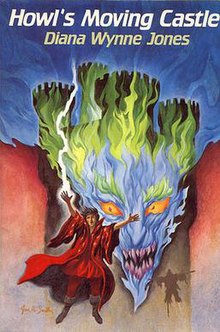 this is perhaps the most nourished i've felt since i read the wrinkle in time trilogy a few years back. i've mentioned here and elsewhere that 2019 was a tumultuous year for me (and will continue into 2020) for reasons of purpose, identity, agency, etc. taking time to sit with this series settled my stomach and my soul, and the anxiety of having everything figured out and put together melted away. the sense of humor than diana wynne jones approaches her works with is one both thoughtful and airy; it is never so convoluted or derogatory as so many jokes these days are (PSA: we can let go of sarcasm by the way, it has never been funny, it has always been bad), that for a time i felt like i was engaging with something new and unfamiliar. not to mention the way that she illustrates her novels with such elegantly simple language. for a time i felt like i was in the presence of colors i had never fully appreciated, scenes in nature and cozy homes that i had taken for granted. if you enjoyed hayao miyazaki's take on her novel "howl's moving castle", then you owe it to yourself to read the original works that might in fact be more enjoyable than the movie (to be fair, they become wildly different from the movie about 100 pages in). "castle in the air" and "house of many ways" are just as good if focussing on different characters within the fantastical lands of ingary and all round up to such a lovely end. it's a series you can always return to and never overstay your welcome. i cannot hope to convey the extent to which these books moved me, but they come with my highest recommendation.
there there - tommy orange
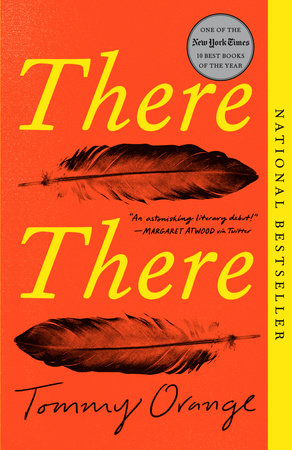 this book had perhaps the most compelling introduction i've read... ever. the rest of the novel is a healthy challenge of presuppositions and touches on the strength and difficulty of the urban native american experience. but the introduction was powerful in a way that made ripples throughout the rest of the work as a whole, that lent power to the splintered narratives that constituted the rest of the novel. it is a hard book. in fact, i feel utterly unequipped to discuss it with the gravity that it deserves in a space like this. but for all the dark that it reveals at the heart of america, i feel there are equal parts hope in the humanity of these characters and their determination to reclaim their identities in a shifting world that wants to erase them.
good omens - neil gaiman and terry pratchett
i had not previously read anything substantial or novel by neil gaiman, but i had spent a number of books in the mind of terry pratchett, and the work that the two of them have come together to construct (in 1990) is made of light fantastic. the television series (written by gaiman!) is also quite lovely, too! a nice, light read that had me chuckling all the while. hyuck hyuck, hyuck... yeah that's about all i can say about that. i think one of the things i ended up enjoying about this so much was being able to engage with a humor that i was so scared of growing up: religious parody. it is wild how rife christianity is for parody with the long history it's had, so it was a bit of fun dabbling in that for a bit, too.
ender's game - arthur c. clarke
 a lot of people really wanted me to read this for a long time. and it took me a long time to get around to it. it took me procrastinating from actual work that would affect my actual life and make things much more difficult for me if i ignored them—so, naturally, i picked up "ender's game" to distract myself from the looming abyss that threatened my well-being. while the first large chunk of the book was only vaguely interesting for me at times, i was hooked the moment that the book takes its first big left turn. which leads me to what i was frustrated with and enamored with in this book, which future books promise to deliver on: we need more bugs in books. not just "insects". i mean bugs. creepy, crawly things. stuff that lays eggs, eats its young, eats its post-coital lovers, eats dirt. i love bugs. we are afraid of bugs, so we don't write about bugs. but i posit that if we were to generate more art and media with bugs, we would come to know and love them at a deeper, more primal level. also dinosaurs. there is a disturbing lack of dinosaurs in our media, and i know... i know it's because the jurassic park money people have money in intellectual property legal whiz-kid bang-bucks that keep that good good locked away from us. imagine with me, if you will, the final jurassic park movie delivering on its next logical step: human-dinosaur fusion. they won't do it, because they are cowards and would sooner attach a gun to a lizard (also cool, but beside the point). we are getting to a point in human development where these things are closer to reality than they are to fiction, so there is a certain level of hesitation that comes with generating content like that. however, i say we need to take the dive. we need to plunker on down to dino-town and just embrace what we know we desire in our heart-of-hearts: human-dinosaur fusion. "ender's game" was great, excited to see more.
late bloomer - maré odomo
 2019 was a difficult year for me, as it featured one of the most difficult trials i've ever faced in my life: the edTPA. for those of you unbaptized by this literal lick of flame from hell, it is the means by which the united states of america deems one worthy of being a credentialed public school teacher. if you grew up roughly in the same period i did, or even before, then you might go, "there is no way that [mr./mrs. x] was ever observed and deemed competent by a higher power, let alone by some desk jockey in an office building somewhere! all they did was eat lunch in class and talk about their wretched lives!" it was certainly jarring to me that so many teachers i'd had in my days of yore had been scrutinized at any level so vociferous as the edTPA. i will not go into detail with the edTPA, it was one of the worst things i've ever had to do in my life. suffice it to say that i needed to be comforted during this time. maré odomo's "late bloomer" came out in 2016 and has been an exercise in compartmentalizing for me ever since. it is a collection of art and comics that touch on things such as the title suggests, as well as general depression and anxiety. none of it is prescriptive and i don't think it'll work for everyone, but whenever i leaf through it i know that these feelings of incompetence and exhaustion are not unique to me and that our society moves at a pace and cherishes that which is wholly inconsistent with a healthy headspace. big fan.
macbeth - william shakespeare & lord of the flies - william goulding
i taught both of these books in the year of our lord 2019 to over 80 sophomore students. this taught me a couple things, in turn:
- lord of the flies owns, hard, and it's better than heart of darkness.
- macbeth owns, hard, and it's actually good and not bad.
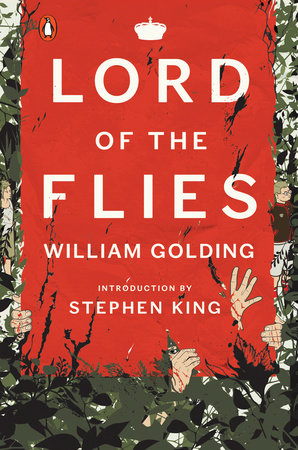 something that i was worried about, going into the teacher field (and, still, trying, to get into, this field,,) was feeling confident with my understanding of a given work. i was going to be influencing blank slates, dummies, little babies for the rest of their lives with my comprehensive take-downs of literary giants—they would be able to smell fear from a mile away, they would know when i was faltering, they would see right through me and call me out for the quack that i am. my education could not (and did not, frankly) prepare me for something like this. sitting in multiple meetings with the english department i was a part of, i felt immediately out of my depth and like a born fool. these guys had it together, they got their masters in this stuff, in english stuff, not just education like me, the child in swaddling cloth, scared out of its mind by the world it had been born into.
 but then i found out: actually, everyone's always faking it until they make it. this may seem like a cheap conclusion, and it is. it's super cheap, i'm just handing it out for free. but it's true. so long as you stay one step ahead of your students, your superiors, your whatevers, you're going to be just fine, because they're concerned with everything else they've got going on in their lives, they hardly have enough time to hear the words that you're sweating about constructing into grammatically sound sentences.
the conversations i had with my students, the good conversations we had, were never because of notes i took during a lecture in my undergrad, my grad school coursework, or even when my mentor teacher was leading by example. it was always when i took the time to listen to what they had brought to the table. kids aren't dummies, babies, or blank slates. they're individuals with complex lives that inform their unique perspectives and wild senses of humor (wild senses of humor), and they've got their own questions about the content that they're spending (or not spending) their time with, rightfully so. "macbeth" and "lord of the flies" gave me opportunities to speak to universal truths in literature and the lived experiences of my students. i was exhausted and had a sore throat at the end of every class session, but taking the time to really dive into the nitty-gritty of these novels at the behest of my wonderful children and their bizarre questions really helped me appreciate these works more and convinced me that, even if only for a short while, i would really like to continue to teach for these mountain-highs.
10 telltale signs that daddy's home - clickhole
as i read this aloud to a group of my closest friends, i laughed, i cried, i sobbed, my belly ached so bad that i couldn't breathe, my friends yelled at me, cursed me, physically assaulted me, and tried to wrench my phone from my hand... i highly recommend you do the same.
something in me will not allow me to burn through this great, great novel. perhaps it is that i have exhausted haruki murakami's library of works. i saved this as an emotional fire hydrant to save me from the impending flames of unemployment, and even in the midst of these fires i cannot bring myself to read through the work in its entirety. i believe i live in fear of the day that i will have no more haruki murakami left to read.
the chrestomanci series - diana wynne jones
after finishing the "howl's moving castle" trilogy, i really wanted to dig in to jones' other works, the largest series of hers being the chrestomanci series. i began the first book and, though its timbre seemed a bit different from what i was used to previously, i know that i'm going to enjoy a lot of the same humor and wonder that i found in her other works. i have tabled it for my next panic attack.
the earthsea cycle - ursula k. le guin
it is a war crime that i have had the splendid bantam trilogy set that i've had for three years and i have only read the first book of this series. i frequently receive calls from anonymous parties at all hours making vague and specious threats regarding my fate if i don't clean up my act soon. but, and i need everyone to shut up right now so they can hear me when i say, i am a confirmed coward and will try to get to "the farthest shore" before the end of 2020.
dune - frank herbert
if you're going to read frank herbert's monolithic work "dune", do not do as i did and read it on the kindle. a work of this heft demands that you carry that weight and know the commitment you are embracing prior to your dallying through the pages. "oh, this is fun! it's very dense, i love how unwieldy it is at first... it does open up, yes?" the book does not lend well to the digital format beyond the occasional easy-access footnotes. i am utterly lost, i don't know my progress well enough to figure out how long its taken me to get to the vague point i'm at, and the work demands your full attention. maybe some day i will return.
desert solitaire - edward abbey
i love the hecking cover of this paperback. its imagery, its feel... it's a good-looking book. and there are scrawls inside too that i can make neither heads-nor-tails of. justin brown told me to read it years ago. i'd like to make good on that. but i am also a known coward.
king leopold's ghost - eric hochschild
when i was supposed to be reading something else, i was possessed by an ebook sale and purchased this to read instead. i had never been so transfixed by a piece of nonfiction in my life (even annie dillard took time for me to adjust to). i would like to finish this in the coming year, it is absolutely haunting and luminous.
ancillary justice - ann leckie
word is: there's a wild rock in this book.
the origin of satan - elaine pagels
hm.. kinda self-explanatory, but i'll include the subtitle: how christians demonized jews, pagans, and heretics. i also recommend episode 666 of "this american life" where pagels is interviewed by ira glass.
an acceptable time - madeleine l'engle
this is the final book in the wrinkle in time quintet, and i'm told that its enjoyment is fantastically manifold when read during samhain. so... i've got some time before i wind up what is one of my favorite young adult trilogies (i don't accept the 4th as canon, so,). also i want to try to read as seasonally as i can, if i can help it. it sounds... fun??
so, happy 2020, enjoy reading! later this weekend we will talk about movies and shows.
and, again, thanks.
> i have read <
dorohedoro - q hayashidai did not have much of an opportunity to read any comics or manga this year, largely due to the fact that i just: didn't make much of an effort. however, running away with my favorite reading experience of the year, i made time to read the conclusion to the 18-year long series "dorohedoro" by q hayashida. to explain dorohedoro would be difficult and rob you of the unique experience to dive into a world so incomprehensibly dark and wholesome that, well... i refuse to do it. what i will say is that i have never before engaged with a story so grungy and hellish on the surface while rippling with joy and good humor just beneath the harsh veneer. i would die for nearly any of the characters in this series (and, in the spirit of the series, be immediately resurrected in some ridiculous manner and promptly enjoy a nice meal of gyoza and beer with my friends and frenemies alike). the series wrapped up is 23 volumes this year in america and is surprisingly available on amazon and even at your local library (if you are, like me, local to [my address]). it is simultaneously absurd, horrifying, lovely, and thoughtful, and no work i can think of that i've ever engaged with has existed so comfortably within the boundaries of its own paradoxes. my good friend seth hahne spent some time unpacking the entire series in his most recent, excellent review over at goodokbad if you're looking for a more in-depth discussion of the series.the complete stories - flannery o'connor
it was august 11th when it hit me: i could not marry flannery o'connor. immediately frustrated by this discovery, i drained my ritual sunday bourbon and sat in the backyard in the evening heat we're so accustomed to in southern orange county year-round. a faint orange glow was sifting through the pepper trees on the hamlet butted up to my backyard and i shifted uneasily in the plastic party chair. i couldn't think much beyond the refrain of "damn.."several things drew me to her writing, the language, the imagery, but what kept me thoroughly invested in her fictions and drawn to her as a writer and a thinker was her razor-sharp ability to cut through the chaff of american religion, specifically of the christian variety, and reveal its darkly glow from time immemorial. having grown up in a world, country, town, household that held certain truths to be self-evident, that leaked into the religious folds of my brain juices, i was quickly desensitized and sold a specific idea of what christian faith was, how it looked, smelled, what it would scream if you squeezed it just so... but it created what i think of as a very sterile textbook-y feel to something that, by its very nature, defied such a categorization. everything is neat, there are highlighted terms and copyrighted images that correspond to specific events,
christianity is difficult, to say the least, for so very many reasons. many of which you, my reader, may bring to the table unique from my own. but if there is one crime that i purport is most heinous from my churlish church-ish experience is the death of wonder. in an effort to combat the cold realism and age of reason that congregants perceived as a threat to their faith and, in-fact, well-being, they adapted the strange tongue of the marketeer, the iron walls of the rationalist, and the warped mask of the politician. "dinosaurs don't matter." "evolution is preposterous." "here are three concrete reasons that prove the existence of god." for the child reared in this pristine faith, there is no room for growth or query. the colors drain. o'connor tugs at the fray on this superficial religion, and what she proves is not that faith is fantasy, rather that we've intentionally blinded ourselves so that when we do find the face of god, we cannot see his disappointment.except that one,
please don't touch,
and don't bother,
"nephilim" cannot be found or explained in the appendix.
also, she's dead. that's the other reason i can't marry her.
the witcher (last wish, blood of elves) - andrzej sapkowski
in 2015, the witcher 3 came out for pc's and xbox's and ps4's, and i sat irritably in my cramped room, stuffed into my tiny desk, staring at the claustrophobic corner that contained the milk-box-sized pc tower that i had and sweat about whether i could spare the $45 that gog.com had decided to charge for a copy of the witcher 3. it looked gorgeous, it was guaranteed to work 75% of the time (as any launch title from cd projekt red was prone to do), and it looked hornier than anything i'd played up until that point in time (even if you take fire emblem awakening into account). i bought it and it was great until my pc's ram petered out because the game was absolutely unstable for the first few months of its release. i was free, for now..
in the last month of 2018, i sat in the corner of a family christmas party in manhattan beach, my kindle gripped tightly in one hand while the other hovered over the "purchase" button for "the last wish: introducing the witcher by andrzej sapkowski" with much of the same intensity i felt in 2015. i bought it and it was great, though i only read about two pages before i was whisked away by family for the evening and wouldn't have a chance to check it out until the following year. i would also read "blood of elves" shortly afterward, and enjoy that as well. maybe some day i'll get around to playing the witcher 3... but i'm going to watch the show first, probably, maybe!
a canticle for leibowitz - walter m. miller jr.
 |
i cannot believe i got this wild version that a
canadian high school teacher saw fit to
publish with essay questions and
review questions?? now i HAVE to teach it.
|
the sellout - paul beatty
this year i was robbed of the opportunity to attend a book club meeting for this book that would have had a nearly entirely white, female attendance. i think that if i had been able to experience that, then i would have had something scary and lovely to write here. but alas, i can only think of my goodreads review for this novel:
i loved everything about it. its humor, its style, its unrepentant demand for humanity. but what's more, i'm excited to see how this book continues to unfold for me. i know that in 20 years i'll still be having experiences that cause me to go, "oh, like the sellout."
i think it holds true. i believe i have yet to read a more frank discussion on black experience with talking about thinking about living in a racist america.
howl's moving castle trilogy - diana wynne jones
this is perhaps the most nourished i've felt since i read the wrinkle in time trilogy a few years back. i've mentioned here and elsewhere that 2019 was a tumultuous year for me (and will continue into 2020) for reasons of purpose, identity, agency, etc. taking time to sit with this series settled my stomach and my soul, and the anxiety of having everything figured out and put together melted away. the sense of humor than diana wynne jones approaches her works with is one both thoughtful and airy; it is never so convoluted or derogatory as so many jokes these days are (PSA: we can let go of sarcasm by the way, it has never been funny, it has always been bad), that for a time i felt like i was engaging with something new and unfamiliar. not to mention the way that she illustrates her novels with such elegantly simple language. for a time i felt like i was in the presence of colors i had never fully appreciated, scenes in nature and cozy homes that i had taken for granted. if you enjoyed hayao miyazaki's take on her novel "howl's moving castle", then you owe it to yourself to read the original works that might in fact be more enjoyable than the movie (to be fair, they become wildly different from the movie about 100 pages in). "castle in the air" and "house of many ways" are just as good if focussing on different characters within the fantastical lands of ingary and all round up to such a lovely end. it's a series you can always return to and never overstay your welcome. i cannot hope to convey the extent to which these books moved me, but they come with my highest recommendation.there there - tommy orange
this book had perhaps the most compelling introduction i've read... ever. the rest of the novel is a healthy challenge of presuppositions and touches on the strength and difficulty of the urban native american experience. but the introduction was powerful in a way that made ripples throughout the rest of the work as a whole, that lent power to the splintered narratives that constituted the rest of the novel. it is a hard book. in fact, i feel utterly unequipped to discuss it with the gravity that it deserves in a space like this. but for all the dark that it reveals at the heart of america, i feel there are equal parts hope in the humanity of these characters and their determination to reclaim their identities in a shifting world that wants to erase them.good omens - neil gaiman and terry pratchett
i had not previously read anything substantial or novel by neil gaiman, but i had spent a number of books in the mind of terry pratchett, and the work that the two of them have come together to construct (in 1990) is made of light fantastic. the television series (written by gaiman!) is also quite lovely, too! a nice, light read that had me chuckling all the while. hyuck hyuck, hyuck... yeah that's about all i can say about that. i think one of the things i ended up enjoying about this so much was being able to engage with a humor that i was so scared of growing up: religious parody. it is wild how rife christianity is for parody with the long history it's had, so it was a bit of fun dabbling in that for a bit, too.
ender's game - arthur c. clarke
a lot of people really wanted me to read this for a long time. and it took me a long time to get around to it. it took me procrastinating from actual work that would affect my actual life and make things much more difficult for me if i ignored them—so, naturally, i picked up "ender's game" to distract myself from the looming abyss that threatened my well-being. while the first large chunk of the book was only vaguely interesting for me at times, i was hooked the moment that the book takes its first big left turn. which leads me to what i was frustrated with and enamored with in this book, which future books promise to deliver on: we need more bugs in books. not just "insects". i mean bugs. creepy, crawly things. stuff that lays eggs, eats its young, eats its post-coital lovers, eats dirt. i love bugs. we are afraid of bugs, so we don't write about bugs. but i posit that if we were to generate more art and media with bugs, we would come to know and love them at a deeper, more primal level. also dinosaurs. there is a disturbing lack of dinosaurs in our media, and i know... i know it's because the jurassic park money people have money in intellectual property legal whiz-kid bang-bucks that keep that good good locked away from us. imagine with me, if you will, the final jurassic park movie delivering on its next logical step: human-dinosaur fusion. they won't do it, because they are cowards and would sooner attach a gun to a lizard (also cool, but beside the point). we are getting to a point in human development where these things are closer to reality than they are to fiction, so there is a certain level of hesitation that comes with generating content like that. however, i say we need to take the dive. we need to plunker on down to dino-town and just embrace what we know we desire in our heart-of-hearts: human-dinosaur fusion. "ender's game" was great, excited to see more.late bloomer - maré odomo
 2019 was a difficult year for me, as it featured one of the most difficult trials i've ever faced in my life: the edTPA. for those of you unbaptized by this literal lick of flame from hell, it is the means by which the united states of america deems one worthy of being a credentialed public school teacher. if you grew up roughly in the same period i did, or even before, then you might go, "there is no way that [mr./mrs. x] was ever observed and deemed competent by a higher power, let alone by some desk jockey in an office building somewhere! all they did was eat lunch in class and talk about their wretched lives!" it was certainly jarring to me that so many teachers i'd had in my days of yore had been scrutinized at any level so vociferous as the edTPA. i will not go into detail with the edTPA, it was one of the worst things i've ever had to do in my life. suffice it to say that i needed to be comforted during this time. maré odomo's "late bloomer" came out in 2016 and has been an exercise in compartmentalizing for me ever since. it is a collection of art and comics that touch on things such as the title suggests, as well as general depression and anxiety. none of it is prescriptive and i don't think it'll work for everyone, but whenever i leaf through it i know that these feelings of incompetence and exhaustion are not unique to me and that our society moves at a pace and cherishes that which is wholly inconsistent with a healthy headspace. big fan.
macbeth - william shakespeare & lord of the flies - william goulding
i taught both of these books in the year of our lord 2019 to over 80 sophomore students. this taught me a couple things, in turn:
- lord of the flies owns, hard, and it's better than heart of darkness.
- macbeth owns, hard, and it's actually good and not bad.
something that i was worried about, going into the teacher field (and, still, trying, to get into, this field,,) was feeling confident with my understanding of a given work. i was going to be influencing blank slates, dummies, little babies for the rest of their lives with my comprehensive take-downs of literary giants—they would be able to smell fear from a mile away, they would know when i was faltering, they would see right through me and call me out for the quack that i am. my education could not (and did not, frankly) prepare me for something like this. sitting in multiple meetings with the english department i was a part of, i felt immediately out of my depth and like a born fool. these guys had it together, they got their masters in this stuff, in english stuff, not just education like me, the child in swaddling cloth, scared out of its mind by the world it had been born into.but then i found out: actually, everyone's always faking it until they make it. this may seem like a cheap conclusion, and it is. it's super cheap, i'm just handing it out for free. but it's true. so long as you stay one step ahead of your students, your superiors, your whatevers, you're going to be just fine, because they're concerned with everything else they've got going on in their lives, they hardly have enough time to hear the words that you're sweating about constructing into grammatically sound sentences.the conversations i had with my students, the good conversations we had, were never because of notes i took during a lecture in my undergrad, my grad school coursework, or even when my mentor teacher was leading by example. it was always when i took the time to listen to what they had brought to the table. kids aren't dummies, babies, or blank slates. they're individuals with complex lives that inform their unique perspectives and wild senses of humor (wild senses of humor), and they've got their own questions about the content that they're spending (or not spending) their time with, rightfully so. "macbeth" and "lord of the flies" gave me opportunities to speak to universal truths in literature and the lived experiences of my students. i was exhausted and had a sore throat at the end of every class session, but taking the time to really dive into the nitty-gritty of these novels at the behest of my wonderful children and their bizarre questions really helped me appreciate these works more and convinced me that, even if only for a short while, i would really like to continue to teach for these mountain-highs.
10 telltale signs that daddy's home - clickhole
as i read this aloud to a group of my closest friends, i laughed, i cried, i sobbed, my belly ached so bad that i couldn't breathe, my friends yelled at me, cursed me, physically assaulted me, and tried to wrench my phone from my hand... i highly recommend you do the same.
> i wanted to read/finish <
killing commendatore - haruki murakamisomething in me will not allow me to burn through this great, great novel. perhaps it is that i have exhausted haruki murakami's library of works. i saved this as an emotional fire hydrant to save me from the impending flames of unemployment, and even in the midst of these fires i cannot bring myself to read through the work in its entirety. i believe i live in fear of the day that i will have no more haruki murakami left to read.
the chrestomanci series - diana wynne jones
after finishing the "howl's moving castle" trilogy, i really wanted to dig in to jones' other works, the largest series of hers being the chrestomanci series. i began the first book and, though its timbre seemed a bit different from what i was used to previously, i know that i'm going to enjoy a lot of the same humor and wonder that i found in her other works. i have tabled it for my next panic attack.
the earthsea cycle - ursula k. le guin
it is a war crime that i have had the splendid bantam trilogy set that i've had for three years and i have only read the first book of this series. i frequently receive calls from anonymous parties at all hours making vague and specious threats regarding my fate if i don't clean up my act soon. but, and i need everyone to shut up right now so they can hear me when i say, i am a confirmed coward and will try to get to "the farthest shore" before the end of 2020.
dune - frank herbert
if you're going to read frank herbert's monolithic work "dune", do not do as i did and read it on the kindle. a work of this heft demands that you carry that weight and know the commitment you are embracing prior to your dallying through the pages. "oh, this is fun! it's very dense, i love how unwieldy it is at first... it does open up, yes?" the book does not lend well to the digital format beyond the occasional easy-access footnotes. i am utterly lost, i don't know my progress well enough to figure out how long its taken me to get to the vague point i'm at, and the work demands your full attention. maybe some day i will return.
desert solitaire - edward abbey
i love the hecking cover of this paperback. its imagery, its feel... it's a good-looking book. and there are scrawls inside too that i can make neither heads-nor-tails of. justin brown told me to read it years ago. i'd like to make good on that. but i am also a known coward.
king leopold's ghost - eric hochschild
when i was supposed to be reading something else, i was possessed by an ebook sale and purchased this to read instead. i had never been so transfixed by a piece of nonfiction in my life (even annie dillard took time for me to adjust to). i would like to finish this in the coming year, it is absolutely haunting and luminous.
ancillary justice - ann leckie
word is: there's a wild rock in this book.
the origin of satan - elaine pagels
hm.. kinda self-explanatory, but i'll include the subtitle: how christians demonized jews, pagans, and heretics. i also recommend episode 666 of "this american life" where pagels is interviewed by ira glass.
an acceptable time - madeleine l'engle
this is the final book in the wrinkle in time quintet, and i'm told that its enjoyment is fantastically manifold when read during samhain. so... i've got some time before i wind up what is one of my favorite young adult trilogies (i don't accept the 4th as canon, so,). also i want to try to read as seasonally as i can, if i can help it. it sounds... fun??
so, happy 2020, enjoy reading! later this weekend we will talk about movies and shows.
and, again, thanks.
Thursday, December 19, 2019
Rollin' Up 2019
howdy, been awhile~

a lot has changed for me (and the world) in the silence since my last round-up of wholesome goods. for a while i tried to make it fun and elaborate, getting dense and esoteric with my writing style while sharing some interests of mine throughout the year. most recently, and in the midst of my breakdown as i realized people were less and less interested in actually reading anything longer than a paragraph, i decided to write even more and dive even deeper into the weird. although i had some fun, it was at the expense of some of my dedicated few friends who still wanted to support me in my annual dalliances with recommendations and light critique. i did it for me. i liked it, i was good at it. and i was really... i was alive. anyway, i still didn't really make a ripple (for my audience, for myself) and i took some time off in the middle of the project (and indefinitely) to figure out what i actually wanted to do with my writing and my propensity to consume large quantities of media every year.
on that front, i'm not really sure i have an answer. since the beginning of facebook, i have posted recommendations of things i have consumed and enjoyed. after a while, i realized that spending too much time explaining why i enjoyed these things either created some sorta debate room or discouraged others from developing their own thoughts about said-thing by engaging with it. so i opted for a very simple imperative formula: "watch _____", "read ______", "play ______". i've had varying success with those statuses depending on the media (films always tend to get more interactions, books less so, games barely), but in recent years it's become somewhat of a long-standing joke for a lot of my friends and followers or else a "yeah thanks, i know" for those already initiated in the product. the annual blog became a side-project that was intended to alleviate my desire to elaborate and talk about a thing i enjoyed or was challenged by. in an age where people are less likely to read and would rather engage with a tweet or comment thread (or, in the mind-boggling case of Discord, participate in a perpetual scroll of increasing girth), i continued my sisyphian pursuit, rolling ever onward for attention.
anyway... blogs suck. that's why i'm happy to announce i'm still gonna try and keep this ball rolling, be it uphill or whatever. i still enjoy writing despite my periods of dormancy and blockage. this year i won't be crafting an elaborate scheme to get you to read my interdimensional-wasteland fiction (specifically, i apologize to justin and connor who would independently fund my publishing if they had the means (i know this, and i love you)). but i will have some bits about film, books, and games. in the interest of me actually producing something worthwhile, i will restrict my writing to pithy paragraphs of substance, something i will appreciate in the long-run and i'm sure whatever readers wander nearby will as well. it'll be something akin to my earlier "media i consumed for the better" posts of old, but hopefully more insightful and less.. uh, needlessly wordy. i had just received my english degree, i had to flex my junky (read: bad) grammar gymnastics somewhere.
if you've gotten this far, thanks! means a lot. i'm doing this for me, i have to remind myself that writing is a passion of mine, a passion in need of pruning and whittling and much more practice. but it means a heap and a bushel that i don't have to do it on my lonesome. so keep an eye on the horizon and we'll be in touch! i plan on having these finished and posted over the first three days of the new year, so look forward to that.
and, again, thanks.
Thursday, August 22, 2019
nightmares
i'm not sleeping well these days (it's because of: the stress), but i'm having some vivid nightmares/unsettling dreams, so i thought i'd write down the gist of em here. i'll update it as i have em.
I. the room (08/19/2019)
me and three others are shuttled (literally) into space to a housing unit. it's affixed to the side of a floating asteroid, that's all we really know though. we don't know each other, and we've been sleeping for the entire flight. our heads are kinda foggy, but we're told (or rather, just know, via dreamknowing) that we're here for a job and we've been selected special due to our skills. not sure what the skills are. not sure of each other, nobody is talking, and we enter the housing unit.
the housing unit is made up of three rooms, forming a sort of T-shape. the two major rooms, a room for rest, and another for socializing and eating, are connected by a door. we spend a majority of our time in both of these rooms and are encouraged not to leave for the third room until we are sufficiently rested and get along well enough. when we are (and we do), we can leave and join one another in a hall that exits from both the rest room and the socializing room, leading down to the third room. all four of us are required to be there in order to access the room. we know nothing of this room except that the job we've been hired for has something to do with this room.
when we enter the room, it is drab. the floor is some sort of grey dirt, hard-packed, old. the walls are the same make as the rest of the housing unit. there are no windows, and there is a low light from the ceiling. when we're all in, the door locks, and there's the presence of something there. we can't see it though. but there's a definite feeling that something is in the room with us. suddenly we hear voices all over—it's nothing in particular, nothing we recognize, it's just cacophonous. it's not human, i know that. we all start to dig, with hands, small rocks, just dig, making small piles familiar to the ones we saw upon entering the room. there's a lot of fear, this was when i "woke" up and had that sensation of buzzing in my head that i get when i'm having a nightmare, along with this sensation that i'm not alone in my room. as i drift back to sleep, me and two of the people i was in the room with are returning to the shuttle and are congratulated for the hard work we did. just as we take off, i'm falling asleep. some time passes and me and three others are getting off the shuttle onto a housing unit, two of them are familiar but i can't place why. the other is unknown to me. apparently we've been selected for this job because of some set of skills we have. we don't know what it is. (the dream repeats, we are being used for some unknown purpose, and not everyone makes it out each time, it seems.)
II. the red woman in the trunk, man in the hole (08/21/2019)
this was brief, but still alarming. i'm with students of mine in wartime. they've been taught how to fire long-distance rifles, and we're making our way through valleys. we are sieged and run deep into a dirty valley where cars are littering the floor. as we're hunkered down beside these cars for cover, i see shots claim the lives of a couple of my students. then i see a series of bullets riddle a car's trunk a bit away. as i watch, a head bursts through the trunk (clear through it) and gets caught at the shoulders, but continues to rise, a bright red woman's head with black holes for eyes and the glimmer of a deep red light within the holes, staring directly at me, continues to rise and rise and rise as her mouth opens wider and wider.
i woke up and laid there for about an hour. i couldn't stop thinking about the woman, and when i'd try to think of any other women, that woman would eventually peel out of the others. i thought of, and drifted off in a lucid dream, of a volcanic expert trying to discern the reason for why lava was bursting from a flat and featureless wall. she was trying to remember what had happened before, when they were analyzing this incredibly blank and massive wall, before gouts of lava came from it. she remembered, while writing in her notes, which she was handing to me, and i was reading, in bed, that she had an associate she'd forgotten til then who was working with her on the wall. he had been coring a portion of it, looking at the core samples, making note of that, etc. but one day, he had made enough corings in a close arrangement that the wall began to crumble and gave way to a deep hole. he wandered into it, hunched over, and would not venture back out. he called to her, and she came over and told him to get out, "it must be unstable" etc., but he wouldn't. he kept inching in deeper. there was an incredible stink coming from within it, and he kept beckoning to her, hunched over, now naked, telling her how incredible it was in the hole. his eyes were the only things she could see after a while, glistening in the dark.
III. the church (8/23/2019)
this one is a bit brief, but it's tied to a fear of mine i've had recently in realizing why i'm having a hard time determining what i want to do for a living. i'm in a neighbor's house, a neighbor who moved out years and years ago, and their house now unnaturally branches back into a high hill that has not existed there prior to. this was the house where i had youth group as a high schooler, which fed into the content into this dream i feel.
there are hundreds of people scattered on the hill leasing to the house and as i make my way up it they are excited and begin to hang on me and make it much more difficult for me to get up to the house. "you're not like them, you don't sound like them," they keep saying amongst other things. there are women who, individually from one another, keep trying to pull me away for themselves. it takes days for me to get into the house.
when i get in, there is a large window overlooking the arroyo behind our neighborhood tract with a pulpit in front of it. there are spiral staircases all over the room, leading into the infinite ceiling above. i'm fluttery inside as i'm at the pulpit, like that feeling after you throw up and every cell in your body is vibrating. when i open my mouth, a language not my own comes out and i don't understand what i'm saying. but i'm excited and the room is excited and a furor is rising and rising. they're all thumping the room and i can't see the floor, there are so many more people than there were before. it's becoming very hot and i feel like the room is a heart chamber beating.
in terror i try to leave but i can't find my way out, there are so many people and they're clamoring and clinging to me and the words are still spilling out of my mouth and i'm sobbing and i can't leave. "you don't sound like the others, you're not like them." it ended there.
IV. the factions (8/24/2019)
i'm in the same house from the previous dream, but it's like it used to be. something really bad is happening outside, in the world, but i'm not completely aware of what it is. a strange militia has taken over the house, with all the people in it (there are a lot of people in the house for some reason) and i get the vibe that they're former prisoners of some sort, they're wearing black and white stripes. i'm being held prisoner, though. they won't let me leave.
suddenly another group is trying to get in and you can't focus on their shape--wings, smearing, colors, all sorts of shifting when you look directly at them. they begin to take the shape of the men and women holding us captive and within the house itself. a wolf begins to slowly push on the door, it's gigantic. it's slowly pushing the door open, which is now made of thick concrete, and someone pushes me forward to push the wolf out. i can't even touch it, the shape and form shifts beneath my hands, and it looks directly at me and the eye fills me with something sick. i don't know how to say it but it felt like nothing i'd felt before, and i still can't tell if that was the dreamself or the wakingself.
it tears into the house and the original captors are dispatched or escape, but it's difficult to tell since the group replacing them look mostly just like them aside from their shimmering outlines, i still can't look directly at them. one turns into an older woman, decked out in incomprehensible clothing and armor(?) and she takes pity on me and says that she can help me get through this. rather than beautiful, i'd say she's sublime, and in this raw power of hers i find a semblance of comfort. she holds me and tucks me into a box on my side, giving me a gap before my face for breathing and eating and holding my hands so i can make the "symbols." i'm not sure what the symbols are now, but at the time it felt like a great mercy, knowing that i would live on in some way, while the rest in that house would not be spared. she sealed the box and i laid there for a time looking at my hands in the faint glow of the box.
Saturday, August 18, 2018
Film Review: The Certain Malaise of a Forest Once Glowing
by "Nebby" Siits
The Certain Malaise of a Forest Once Glowing
Director: Stev Diedrich
Writer: Yana Diedrich
The Certain Malaise of a Forest Once Glowing is a series of long-shots via crude handsets depicting a scorched forest and the men who wander through it. Some are scavenging, some are hiding, some are trying to re-cultivate. It is unintentionally very black and white, it has very little in the way of professional audio-work, and it ends nearly as senselessly ominous as it begins. The site is located at the basin of the Valley Deep in light of the fires that tore through the land some 40 years ago. Perhaps the Diedrichs' desired to respond to Paolo Limboça's seminal work, Living Fire, a series of poems grappling with the country's indifference for the Valley Deep chemical fires, which tore through Jeffersonian wilds and cities within the span of a month, leaving hundreds of thousands displaced and forgotten (Limboça among the survivors). However, if this is their goal, they are intentionally vague. At times it seems nearly found footage, depicting the urban mythical; a sequence follows a man laden with wood, walking colorlessly into a field, and suddenly stopping, the track-shot halting abruptly with the man off-screen, panning quickly back to show the man motionless, featureless, for what seems an eternity. It is as though witnessing an unearthly scene, or the margins of a natural law. A haunting.
Handsets continue to see use in the world of horror thanks to their familiar lens, practicality, and how easy they are to hide for footage potentially unwanted, though these films often release to little acclaim (see: Pale, Cinder, or the Whole Man, Snared, etc.). Their ease of access does not necessarily inform the quality of the minds behind the lens. What the Diedrichs do is not pedantic to the genre, in fact it is wholly its own in a way that dives into the subliminal previously unawoken. In order for The Certain Malaise of a Forest Once Glowing to take root, the Valley Deep had to be burned, had to be abandoned, had to become the natural anomaly that it is today. There is no widely understood reason that the land continues to rot, is void of bacterial life, or remains constant at all in an era of incredible ecological upheaval. Neither why it draws the attention that it does. Hollow shapes wandering the ashes to their own purposes, unknown. While paradoxically, the government, the country, largely unconcerned, almost percussively so. What the Diedrichs see is the land uncensored, shutters drawn.
Yana's writing, save its direction, is not featured for reasons unknown. As it is, it is a miracle that the film sees the light of day and has an audience at all, as this auteur couple keeps their interactions with the industry brief and often stilted, as though ambassadors for a larger purpose and this is merely a formality to a greater sequence. Within the flashdrive that contained their finished product, a readme.txt delineated Yana's discoveries while filming, curiously articulate and removed. "Stegner's New Cycle Principle demands the balance of any ecological community of practice to hinge upon the axis of relational zoning contingent upon consensual aggregation—these men are alone." Though, it is not without its obvious insights, "Where are women—men wander alone." Earlier in the notes, Yana states that her intention with the script for the film was for her husband, Stev, and Stev alone. There is not a shred of evidence that the script even existed outside of the conversations held between the couple. This checks out: the Diedrichs are most understood when cryptic.
However, this film seems to embrace the anonymous fear that it records, and as such serves no lasting purpose but mystical intrigue. The Diedrich's refusal to set word or tongue to tape confirms as much. My fear is that public (though liminal) praise for its ethereal visage will drown its louder cry for an answer, but a world that could metastasize such a need for this vision is one that would just as soon abandon any message scrawled upon the walls, regardless of its bloodly ink.
6.8/9
This work is replicated in identical to its original, as per the Culture-Safe dictates (9.4114) of Our Lady Diaspora, by the Curator Proper of Catacombian Wells (1.445).
The Certain Malaise of a Forest Once Glowing
Director: Stev Diedrich
Writer: Yana Diedrich
The Certain Malaise of a Forest Once Glowing is a series of long-shots via crude handsets depicting a scorched forest and the men who wander through it. Some are scavenging, some are hiding, some are trying to re-cultivate. It is unintentionally very black and white, it has very little in the way of professional audio-work, and it ends nearly as senselessly ominous as it begins. The site is located at the basin of the Valley Deep in light of the fires that tore through the land some 40 years ago. Perhaps the Diedrichs' desired to respond to Paolo Limboça's seminal work, Living Fire, a series of poems grappling with the country's indifference for the Valley Deep chemical fires, which tore through Jeffersonian wilds and cities within the span of a month, leaving hundreds of thousands displaced and forgotten (Limboça among the survivors). However, if this is their goal, they are intentionally vague. At times it seems nearly found footage, depicting the urban mythical; a sequence follows a man laden with wood, walking colorlessly into a field, and suddenly stopping, the track-shot halting abruptly with the man off-screen, panning quickly back to show the man motionless, featureless, for what seems an eternity. It is as though witnessing an unearthly scene, or the margins of a natural law. A haunting.
Handsets continue to see use in the world of horror thanks to their familiar lens, practicality, and how easy they are to hide for footage potentially unwanted, though these films often release to little acclaim (see: Pale, Cinder, or the Whole Man, Snared, etc.). Their ease of access does not necessarily inform the quality of the minds behind the lens. What the Diedrichs do is not pedantic to the genre, in fact it is wholly its own in a way that dives into the subliminal previously unawoken. In order for The Certain Malaise of a Forest Once Glowing to take root, the Valley Deep had to be burned, had to be abandoned, had to become the natural anomaly that it is today. There is no widely understood reason that the land continues to rot, is void of bacterial life, or remains constant at all in an era of incredible ecological upheaval. Neither why it draws the attention that it does. Hollow shapes wandering the ashes to their own purposes, unknown. While paradoxically, the government, the country, largely unconcerned, almost percussively so. What the Diedrichs see is the land uncensored, shutters drawn.
* * * * * * * * * * * * * * * * * * * * * * * * * * *
However, this film seems to embrace the anonymous fear that it records, and as such serves no lasting purpose but mystical intrigue. The Diedrich's refusal to set word or tongue to tape confirms as much. My fear is that public (though liminal) praise for its ethereal visage will drown its louder cry for an answer, but a world that could metastasize such a need for this vision is one that would just as soon abandon any message scrawled upon the walls, regardless of its bloodly ink.
6.8/9
This work is replicated in identical to its original, as per the Culture-Safe dictates (9.4114) of Our Lady Diaspora, by the Curator Proper of Catacombian Wells (1.445).
Saturday, August 4, 2018
Film Review: The Magnificent Self-Immolation of Menden Leavens
by "Nebby" Siit
The Magnificent Self-Immolation of Menden Leavens
Director: Deren Feck
Writer: Deren Feck, Ché (consulting)
The Magnificent Self-Immolation of Menden Leavens is a film about loving a world that is begging to burn. This is Deren Feck's first film since The Agitates of Furor, marking some 20 cycles between the two. It runs the standard 35 minutes, but taps into something timeless. And as Feck is wont to do, ruminates on the philosophies of GYIA, regarding perpetuity (the irony is not lost here).
The story takes place from the perspective of Menden Leavens (played by recurring character-actor and life-long friend of Feck, Servil Jen), a young man growing in a world increasingly stark; day to day the world sloughs its beauty to accommodate the fickle wishes of man. As he becomes more and more aware of the dissonance in his life, a prophetic vision comes to him on the asphalt plains of a forgotten land, giving him the direction he hungers for.
The film follows the typical arc of any Feck film: an ingratiating world exposed through the mundane (Menden's walk), the hand that man plays in it (the asphalt plains, seeing the needlessly dead), and the call to arms (the titular "Magnificent Self-Immolation").
One could sit to reflect on the message of this film and sum it up within a review succinctly delineating its manifold meaning (which, admittedly, would take more than a "succinct review"). However, I believe that it is a better use of my time, and one could argue my responsibility, to educate the reader through the lens of The Magnificent Self-Immolation of Menden Leavens. Besides, it wouldn't be a true "Feckian" review if it didn't stoke the coals of a harder conversation.
Feck's Magnificent raises questions in how we, as an audience, interact with the medium. These days, as in days in the past, there is a concern with labeling a film, or any work for that matter, as "good", or especially: a "favorite". When a film tickles a certain fancy, meets an expectation, or releases with refreshing bombast, it is easy for one to lay their laurels at its mound. "This is my favorite." "This is a good film." However, it is often the case that films such as these, what garner attention almost rabidly so, contain a rather vapid or super-condensed vision of their conceit's potential. That is to say, it would prove difficult to last the test of time because the film is scaffolded for easy, present consumption. When a work of any kind is crafted solely for an immediate response, its constitution remains weak, and its legs are blown out by the next work of its kind—"wash, rinse, repeat," to quote the ancient refrain.
And in the end, we are none the better. For film to maintain any relevancy in our increasingly illiterate world, it must pass along the wisdom our forebears have worn their knuckles to bear to light. In an age where The Lathe of Aeschylus is misunderstood for a brand of tillage, being only some 30 cycles from its debut, what hope have we to remember recent scourges that have ravaged our weary spit of land? Before the Valley Deep and Darkest Tundra are merely names, losing their significance, and the fear that wrought those names into our tongue? A time of unencumbered relativity is upon us. Feck knows it, and shows us as much in the sequence prior to Menden's self-immolation. "I do not know this land, and it knows nothing of me," Menden says. "What left here is known? And what is best left unknown? A world no longer the world."
Feck's film is not "good", it is not a "favorite", and you will be hard-pressed to find those who would have the mind to say so (perhaps shock-auth Phoebe Korb will have their shallow retort). What it is is foundational. A hallmark to our floundering age. I would argue a wake-up call, but it seems that Feck still struggles with communicating to the everyman; perhaps I am only preaching to my own choir, my own cultivation of a dying intelligentsia, a void. But I am not without hope, for the world's pangs often precede a birth, and should we remain vigilant and grounded in our perpetuity (with no ounce of irony) we will see the night through.
"To live, to die, we live in cyclical wonder."
9/9
This work is replicated in identical to its original, as per the Culture-Safe dictates (9.4114) of Our Lady Diaspora, by the Curator Proper of Catacombian Wells (1.445).
The Magnificent Self-Immolation of Menden Leavens
Director: Deren Feck
Writer: Deren Feck, Ché (consulting)
The Magnificent Self-Immolation of Menden Leavens is a film about loving a world that is begging to burn. This is Deren Feck's first film since The Agitates of Furor, marking some 20 cycles between the two. It runs the standard 35 minutes, but taps into something timeless. And as Feck is wont to do, ruminates on the philosophies of GYIA, regarding perpetuity (the irony is not lost here).
The story takes place from the perspective of Menden Leavens (played by recurring character-actor and life-long friend of Feck, Servil Jen), a young man growing in a world increasingly stark; day to day the world sloughs its beauty to accommodate the fickle wishes of man. As he becomes more and more aware of the dissonance in his life, a prophetic vision comes to him on the asphalt plains of a forgotten land, giving him the direction he hungers for.
The film follows the typical arc of any Feck film: an ingratiating world exposed through the mundane (Menden's walk), the hand that man plays in it (the asphalt plains, seeing the needlessly dead), and the call to arms (the titular "Magnificent Self-Immolation").
One could sit to reflect on the message of this film and sum it up within a review succinctly delineating its manifold meaning (which, admittedly, would take more than a "succinct review"). However, I believe that it is a better use of my time, and one could argue my responsibility, to educate the reader through the lens of The Magnificent Self-Immolation of Menden Leavens. Besides, it wouldn't be a true "Feckian" review if it didn't stoke the coals of a harder conversation.
* * * * * * * * * * * * * * * * * * * * * * * * * * *
And in the end, we are none the better. For film to maintain any relevancy in our increasingly illiterate world, it must pass along the wisdom our forebears have worn their knuckles to bear to light. In an age where The Lathe of Aeschylus is misunderstood for a brand of tillage, being only some 30 cycles from its debut, what hope have we to remember recent scourges that have ravaged our weary spit of land? Before the Valley Deep and Darkest Tundra are merely names, losing their significance, and the fear that wrought those names into our tongue? A time of unencumbered relativity is upon us. Feck knows it, and shows us as much in the sequence prior to Menden's self-immolation. "I do not know this land, and it knows nothing of me," Menden says. "What left here is known? And what is best left unknown? A world no longer the world."
Feck's film is not "good", it is not a "favorite", and you will be hard-pressed to find those who would have the mind to say so (perhaps shock-auth Phoebe Korb will have their shallow retort). What it is is foundational. A hallmark to our floundering age. I would argue a wake-up call, but it seems that Feck still struggles with communicating to the everyman; perhaps I am only preaching to my own choir, my own cultivation of a dying intelligentsia, a void. But I am not without hope, for the world's pangs often precede a birth, and should we remain vigilant and grounded in our perpetuity (with no ounce of irony) we will see the night through.
"To live, to die, we live in cyclical wonder."
9/9
This work is replicated in identical to its original, as per the Culture-Safe dictates (9.4114) of Our Lady Diaspora, by the Curator Proper of Catacombian Wells (1.445).
Monday, January 1, 2018
2017's Music That I "Liked"
Let's kick things off for my weekly recs for the last year of entertainment I consumed. This year I've decided to shoulder a bigger load and as such will be posting once a week with my recommendations for the remaineder of "January"—but perhaps we'll go further into the year cycle! Please engage! Everything is linked for your pleasure.. Please click the links of anything that interests you! This year I Seek to Impress!
Original Soundtrack to "Boxes of Glass" by Willem Setters
In an attempt to curry favor amongst downtrodden 40-somethings (the crop-fires affected this age-bracket hardest) writer/director Geralt Spivak was hellbent on obfuscating old tales of the Old World as some sort of metaphor. The film itself was garbage. It relied too heavily upon misplaced nostalgia and was severely intentional with its disgusting "us vs. the world". It seems that Spivak still does not understand what brought down the Old World in the first place, and he settles for a masturbatory fantasy wherein old laws are worshipped and the class systems are again used as stepping stones for the elite.
Thankfully, because he was either absent from the filming or willfully ignored instruction (of the two I lean heavily on the latter), Willem Setters' mastery of the foundant nouveau "earscape" redeems an otherwise grotesque malaise of ignorance and cheap depravity. Most enjoyable when cooking or amidst outdoor chores. An understanding yet unseen for the reviving medium.
"92m," by 92
A seminal work of the nonagenarian crew 92 known to most, "92m," is an interesting twist on the previously tired practice of throat-singing. I slept on this one when it debuted several cycles ago, and am regretting having taken this long to grapple with it.
Ixii, cryptic lead singer and conceptualist for the album's overarching theme "sterilization", claims the ideas and her gifts were received in a dream from GYIA. With or without arcane influence, the album is a triumph and stretches deep into the conceptual without losing its heart: THIS is how it ends.
"Eye White; Reflect" by Straw
It's hardly a surprise these days to see Straw at the top of the charts, but the sheer volume of their work in relation to how many years they've been featured should be testimony enough to their prestige. In a way, their popularity is due in no small part to how they've become the voice of the zeitgeist.
"Queen Scream," "Memymitica," and "GANG" are go-to's for any casual Straw evangelist, but the simple cadence of "Prophesy! Prophesy!" and sizzling ear-worm "Blistering Sword of the Landsknecht" are anthemic. With this release, Straw has solidified their placement in Jeffersonian history, but it is enough for them to remain merely celebrity?
"Forests Forgotten" by Gary
It broke my goddam heart to see this posthumous release, due in no small part to its prophetic lyrics about Gary's untimely death. Ranging from the political to raw emotion, Gary has always sought difficulty. "Difficulty," he argues in "Satin," "is truth, and yet it's still so much easier to settle for the dust and dregs... shit."
An intimate collection of singles and remixes lifted from his corrugated cell phone, and oftentimes seems dangerously close to triggering the artist's own seance... if only it could.
Monday, May 29, 2017
the weekly thing: mass of the fermenting dregs
hi, welcome to my fourth weekly thing. this hazy monday evening i'd like to talk about a band i've been listening to on my commutes hither and thither, japanese shoegaze phenomenon MASS OF THE FERMENTING DREGS (hereafter referred to as: motfd, for simplicity's sake, and also to encourage such a violent amalgamation of letters).
music is something i'm still learning to write about. it's a medium that, in my opinion, does everything it can to keep from being nailed to paper. lyrics are not enough to fully grasp any good song—if that were the case, let it be a poem or creed. lyrics are also unnecessary, and if present one need not always understand them to feel the weight of the music. at least, that's my fledgling opinion. growing up in a conservative christian background, i've had my fill of ham-handed lyrics, and from a young age began to avoid them altogether.
like any good web-based millenial growing up, the gateway drug of anime soon busted up and infected any and all previous hobbies and interests i had—the games i played became japanese-made (JRPG's, etc.), the cartoons i watched became anime, the movies and music i listened to, etc. etc. i was fanatical about GACKT and Utada Hikaru, had a crush on multiple anime characters (we can safely narrow down the timeline of my sexual awakening to this hazy no-man's land of pre-pubescence), etc. etc.
all that being said, from a younger age than most, i was steeped in a world of music so different from my physical surroundings'. i didn't (and still don't) understand much japanese beyond the typical bits that you learn via osmosis with years and years of subbed anime, but it never stopped me from being able to enjoy and emote with the music. it was almost as though the voice became the instrument and the language different notes and chords..
anyway, motfd is great. a shoegaze band formed in 2002, breaking up in 2010, and getting back together in 2015. the music is energetic and exhilarating. despite the language-barrier, the tunes are catchy and are guaranteed to get lodged in your head. beyond that, i don't know much of them at all and prefer it that way (to an extent, because i obviously wanna know when their next album drops, etc. etc.), because it becomes almost magical—songs that sink in your soul and speak to you in ways you might not fully understand yet. music from a far-away land that feels fantastic and surreal with its neon superflat (ironically). because the song's not telling you how to feel explicitly through lyrics, it's almost the most honest way to experience music.
i recommend it for boring drives, essay-writing, drawing, and running. i do not recommend it for conservative parents, mentioning at work, or playing aloud on your phone while you're walking on the sidewalk (which people do all the time with everything???).
my verdict: i'm not very good at talking about music at all, but you should still check out motfd.
Monday, May 22, 2017
the weekly thing: the underground railroad
hi, welcome to my third weekly thing. this (very hot and uncomfortable) monday afternoon i'd like to talk about a book i read for my monthly book club, Colson Whitehead's The Underground Railroad.
 if the title was any indicator, it is by no means an "easy" book, which is simultaneously its strength and weakness. given the gravitas, it demands a certain amount of terror to even remotely begin to respectfully approach the subject matter (the enslavement of the consequently African American). though it's not the cat-of-nine-tails or the brutal punishments that await captured slaves that fills the reader with dread, so much as the feeling of futility in america; if a slave were to escape, where would they even go? what could they possibly do to secure peaceful livings for themselves and any family they might have? how could they scrub away the traumatizing lives they'd lived hitherto?
should the book have ended with this trajectory, it would have remained a brutally honest teardown of the american dream. thankfully, author Colson Whitehead's vision is not without hope, though it is certainly less "biblical" as one typically finds in accounts trying to alleviate the horrors of the early american slave-trade, openly-critical of the flawed theologies of the past and the theologies forgotten today. his answer instead: the revelation of the mythical underground railroad.
though the underground railroad in reality had nothing to do with trains or subterranean tunnels, this book has everything to do with them. cavernous mouths that defy explanation, whose origins are shrouded in mystery, filled with ornately decorated stations and their charismatic and heavily symbolic conductors. at the revelation, Cora asks a stationmaster who built the fantastic roads. ominously they reply, "who builds anything in this country?" the sublimely treacherous tunnels are shifting metaphor for many things, but perhaps the most damning is revealed in this quote from the aforementioned conductor:
my verdict: read The Underground Railroad.

should the book have ended with this trajectory, it would have remained a brutally honest teardown of the american dream. thankfully, author Colson Whitehead's vision is not without hope, though it is certainly less "biblical" as one typically finds in accounts trying to alleviate the horrors of the early american slave-trade, openly-critical of the flawed theologies of the past and the theologies forgotten today. his answer instead: the revelation of the mythical underground railroad.
though the underground railroad in reality had nothing to do with trains or subterranean tunnels, this book has everything to do with them. cavernous mouths that defy explanation, whose origins are shrouded in mystery, filled with ornately decorated stations and their charismatic and heavily symbolic conductors. at the revelation, Cora asks a stationmaster who built the fantastic roads. ominously they reply, "who builds anything in this country?" the sublimely treacherous tunnels are shifting metaphor for many things, but perhaps the most damning is revealed in this quote from the aforementioned conductor:
Cora and Caesar climbed into the [train car] and Lumbly abruptly shut them in. He peered between the gaps in the wood. "If you want to see what this nation is all about, I always say, you have to ride the rails. Look outside as you speed through, and you'll find the true face of America." He slapped the wall of the boxcar as a signal. The train lurched forward. (p.69)with the case for the mythic cracked open only pages before, the reader is left to interpret what the conductor meant. as Cora and co. hurtle down the tracks towards their uncertain fates, they have nothing to hold on to but each other and a hope that must defy the strength of the powers that be.
my verdict: read The Underground Railroad.
Monday, May 15, 2017
the weekly thing: wong kar-wai's Chungking Express
hi, welcome to my second weekly thing. this monday evening i'd like to talk about a movie i saw earlier this week that's really stuck with me, Chungking Express.
Listen while you Read!
there's something intoxicating nowadays about the mundane for us 20-somethings. maybe it's envy, or simplicity; it's hard to look at the world we live in and find much to be excited about at face-value. in a society increasingly anxious about its future, gems like wong kar-wai's Chungking Express reveal the fantastic wonder hidden in the noise of everyday living. the film is comprised of two stories, loosely connected through character interaction, but universal in themes of love and estrangement. for the initiated, it's the closest we'll ever get to Haruki Murakami in film (if not, yell at me and tell me what else is), so if only for that reason check it out.

between the hapless detective's ritual of "jogging until there's no more water in [my] body to waste on tears" and the beat-cop's pep-talks with his lover's forgotten tchotchkes (btw, both the dudes are cops, and that is sorta confusing in the middle), the film oozes with an intimate familiarity for those survivors of the silent break-up. no closure, and no chance of returning to the way things were, these characters wander the no-man's lands of their (now) singular lives, carrying ghosts in tins of pineapple and plastic airplanes.

after recently watching "your name.", i sat aghast in my theater-seat; could i ever experience the Greatest Love i possibly could outside of some Fantastic Intervention (the threads of fate unwinding, interdimensional travel, some special revelation)? how could i be sure in any relationship that wasn't shattering the earth at every moment with Inexplicable Love? thankfully, the afterglow wore off and the Borgesian garden of forking paths that my emotions had wrought began to unfurl before me, leading to a simple, cool clearing wherein sat this film.
Chungking Express is a reminder that the lives we lead are beautiful, that they are lovely, and that even a simple love can be a great love.
my verdict: watch Chungking Express. (i watched in on FilmStruck, which i just highly recommend in general if you like film)

Monday, May 8, 2017
the weekly thing: tumbleseed
hi, welcome to my first weekly thing. this monday i'd like to talk about a game i've been whittling at for the last week (without much luck, but plenty of fun), Tumbleseed.

Tumbleseed is best described as a (literal) delicate balancing act between a roguelike (procedurally-generated levels, loss of items at death, notoriously difficult, heavy on replay value (think Mystery Dungeon, Faster Than Light, Spelunky, Diablo, etc.)) and the most intense game of marbles you've ever played. using a vine, the player is charged with rolling a seed back and forth while ascending a mountain-path, avoiding precarious holes and a host of unique enemies along the way. although the path is randomly generated upon each play, nothing about its gameplay is unpredictable—rather, as any good roguelike, its mechanics are ironclad and your only surety in the shifting world.

securing different power-ups (30) upon your ascension, each play-through is a vastly different experience as you learn to adapt to the hostile mountain's environs. one play you might find yourself blasting your way through with the laser-flowers or the pistol-seed, while another might see you stealthily climb using the cloak-seed or the jump-seed (my nicknames, as i've never kept one long enough to remember the name). the possibilities are as endless as they are unpredictable. on paper the journey may seem short-lived, sojourning through 5 areas before facing the game's end, but lord knows that aside from divine intervention you'll be spending plenty of time in the forest (like me) before you're even fit to slay your first lip-snake (again, my nickname, but i sure hope they're actually called lip-snakes) or narrowly divine your way across't the holey grounds consistently.
 |
| (there's the lip-snake!!! i hate it!!!!) |
i like Tumbleseed a lot!! and many of the same reasons that i enjoyed Spelunky (although a very different game) are found here as well. it's one of those games whose mechanics stick with you outside of the game; i find myself constantly balancing the mouse on my computer screen and tilting my phone absent-mindedly when scrolling (slowly!!) through content, as though i'm subconsciously fine-tuning my motor skills for my next journey up the mountain. it's a difficult game to master, but i think that makes it a game that's all the more enjoyable for just being a fun game to play. when i mentioned "whittling", i really meant it. the reward in playing isn't manifested in achievements or unlockable content, rather in the pure unadulterated fun of becoming intimate with a cunning and beautiful (beautiful!!!) world. the game's soundtrack is fantastic, and at moments is reminiscent of Disasterpeace's stunning soundtrack to indie game FEZ. the game also reminds me of the similarly organic plot-line'd Studio Amanita's Botanicula: seedlings righteously seeking to fight for the greater good (wayyy less drug references, though.. make of that what you will).
Tumbleseed is only $15, which is a fantastic steal for this terrifying(ly cute) pinball "roguelite". i played it on my Nintendo Switch, which i think is the ideal setup as it's one of the first 3rd party games to really realize the use of "HD Rumble"—it actually feels like you're rolling a marble from left-to-right and that Flabbergasts me.
my verdict: play Tumbleseed.

(images from tumbleseed's official website, except for the last one, which is from my own righteous journey ✊ )
Thursday, May 4, 2017
the "the weekly thing" thing
Hey, and hello, as part of me getting back into the swing of writing and distracting myself from: my future, politics, the eventual heat-death of the universe (classic!!)... I've decided to write about a thing I'm doing, weekly. I want to keep it similar to my recently-annual practice of "consumed" entertainment, so it'll be things like a movie or film I saw, a book I'm chugging through, a game I've played, or an article or some such that I've read. Things Like That.
I'll just keep it simple. Something like a paragraph. I like to be pretty brief elsewhere when presenting my opinion on stuff people should check out (see: my facebook), so here will be a nice little corner I can kinda unpack my interests (or un-interests) a bit.
I'll try to post once every Monday..
We'll see!
Friday, January 6, 2017
Some Stuff I Consumed for the Better in 2016: Books
2016 was a really good year for Zach and Books. It's very rare that I wonder consistently, from book to book, whether or not I'll ever be satisfied again after such an incredible narrative. I'll detail them in the order I read them this year (not including smaller/unfinished works that I partook in this year).
 Music for Chameleons by Truman Capote - A wonderful collection of short stories by Truman Capote. The book was dusty and hidden in the bottom of an old box from ye olde college days, a gift from an old English Major compatriot in my freshman year who was sad to see me go on to major in Biology for a whole whopping half-semester. She graduated later that semester and told me that I had a mind for stories and that I'd enjoy this and another book she gave me by Willa Cather, "The Troll Gardens". Once more an unknown author. Surrounded by the effluvia of my pride, I took the books graciously, she graduated and got married like all Biola Graduates are wont to do, and I promptly forgot them until I'd been graduated with my english degree hung on a wall these two years, simpering in my personal slough of despond.
Truman was delightful. The previous year was filled with Roberto Bolaño and an unhealthy load of Haruki Murakami, and I'd left no room for my humor or wit to be engaged. These two authors, focussed on the depravity and the unknown, had left me grasping in the dark. Seeking reprieve from my (beautiful) edition of "Moby Dick", I found "Music for Chameleons" sitting on a stack of things to sort in my room for the new year and thought I'd take that with me on my day off, a light book for a light day. It was halfway through my bagel sandwich, choking, that I realized that I'd been too flippant with the nature of this collection of short stories (or recollections, if you prefer), and found myself hypnotized and entertained more than I'd been by a book in years.
Capote's short stories seem to be small vignettes of his own fantastical life, some almost a prototype of sorts for his "In Cold Blood", the greater known of his works (which I have yet to read, as well). His writing is economical and sharp, and his dialogue more realistic than the conversations you have with your loved ones. It goes without saying that all the recommendations I make on my blog come with high commendations, but I feel that of all the books featured here this would be the most approachable and appreciated by the everyman.
 New York Trilogy by Paul Auster - I haven't read much Raymond Chandler in recent years, "Maltese Falcon" continues to collect dust on my shelf, and I've only read one Agatha Christie mystery in the last four years, but I'd like to think that Paul Auster's "New York Trilogy" has absolved some of these egregious sins. If you were unaware by the associations, Paul Auster has crafted three novella in the noir/detective/mystery genres whose underlying message focuses on identity. A pretty, you know, vague and huge topic.
I thoroughly enjoyed the three novella ("City of Glass", "Ghosts", and "The Locked Room") as a deconstruction of the crime fiction genre, and the cold stare into the deep abyss of solipsism. A hard-boiled detective can only be so hard, so boiled, and Paul Auster does dances elegantly on the fine-line between the heavy-handed and the obscure. His characters are simultaneously relatable and ethereal (or infernal, depending on the book), and the conceits are always fascinating and provocative.
Come for the existential dread, stay for the crippling anxiety.
 The Left Hand of Darkness by Ursula Le Guin - One of the best pieces of science fiction I've ever read, and my first dive into an Ursula Le Guin novel. Perhaps the greatest uncertainty the average reader has nowadays with being recommended a book within the genre of sci-fi is the perceived execution: joining some unfortunately-named character (typically consists of X's and unpronouncable jumbles of consonants with all manner of weird apostrophe and accents), we venture through some post apocalypse/proto-human land wherein drinks are blue, things fly, and some hugely controversial modern thought is celebrated while some common practice is lambasted as ancient or beneath their culture, etc.et .ce .t c. e.t c.e t. c.e t. c. et. .c e.t . c.
Le Guin either knows to avoid this or just knows better altogether, as her characters and settings are real and corporeal despite their nomenclature and physicality. The daughter of a writer and an anthropologist, she learned the delicate balance of a world and its inhabitants and her writing proves so masterfully in "The Left Hand of Darkness". The concerns of the characters are entirely human and, I think, and interesting topic for musing given today's societal context; her understanding and execution of a sexless race belies a deeper elocution about sex and culture, both elementary and sophisticated.
If you enjoy a healthy dose of sociology with your fiction, look no further; Le Guin is the master.
 A Confederacy of Dunces by John Kennedy Toole - I believe I've done an authentic Nathan Lane guffaw twice in my life. The first time was when I was told men were inherently good. The second was when I was sitting in a Hidden House coffee shop reading "A Confederacy of Dunces" and had to leave the shop because I was disturbing my fellow reformed-hipster-xtian customers and a grandma.
I've laughed before, plenty of times. In fact, unlike some, I'm unable to number the times I've laughed here, in my time on Earth. But never before have I laughed so raucously because of the written word. Never before have I had to put a book down and catch my breath, repeating lines out loud as though to preserve them in this fleshy realm before banishing them back to the pages in my hands. Never before have I beheld the belch as such an incredible bodily act, the intestines as such a holy labyrinth...
John Kennedy Toole is one of the last great satirists we've seen—and I mean that beyond the humor, beyond the vulgar jokes that are sooooooooo so so so good. Toole captures a unique facet of human depravity that can be found so commonly today in the Internet Troll. Ignatius Riley, the main character of this fantastic novel, embodies the One and True "M'lady", the "Edgelord", the abnoxious "Anon", that infernal Youtube commenter... And in witnessing the utter ridiculousness of such a person, a certain levity is bestowed upon the reader. "Oh, I'm not the only one that's noticed folks like this!" or "Well, I'm happy to know that they have a rough go of it as well." or "babhbwhbahbwahbwhabahahhahahahahah", all proper responses, and a metaphorical peptobysmol in this future where our every action is witnessed and rated by a host of anonymous ne're-do-wells, hellbent on the destruction of goodness and progress. The book, similarly to Capote's aforementioned work, did wonders for my well-being and probably added two more years to my life.
If you're looking for a good romp, this is it.
 The Name of the Rose by Umberto Eco - The final book I finished before the end of this year, and what a work it was. Umberto Eco claims that the reason he wrote this book began with the simple premise, "I began writing in March of 1978, prodded by a seminal idea: I felt like poisoning a monk". But, as he concludes in a post-script to the work, he had to build quite a world around it in order to achieve a work of this nature within the specific parameters he had constructed.
Surely the reason this book has wiggled its way into one of my favorite books of all time was the story, but perhaps moreso than the story was the methodology with which Eco wrote it. Piece by piece, he constructed the narrative based on meticulous historical fact, until the story that formed before him was much more nuanced than the poisoning of a monk; it became a conversation on 14th century Christendom, and probably one of my favorite discussions on Christendom as a whole. The work is simultaneously humbling and affirming, with a sobering reflection for the reader: not much has changed in the controversies of Christianity since the 14th century, and perhaps before that.
The work is not necessarily a Christian one, though the subject matter may be so. It merely tells a tale within that context, which is such a rare and wondrous thing this day in age where anything remotely Christian must either tie itself warts and all to the religion, or deny it and claim obstinate apposition. There is a fear today of objectively viewing the religion through the perspective of fiction without underlying intentions, I think a weakness on both fronts.
"The Name of the Rose" is a fantastic murder mystery, and has actually had a more acute effect on my faith in recent years than any theologian or book on such topics. And I think that's something that anybody should experience, despite any grievances or misgivings they may have with Judeo-Christian thought in general, as Eco is able to write in such a way that you are hermetically sealed from any proselytizing. A masterfully written work and my favorite of 2016.
Honorable Mention
A Wizard of Earthsea by Ursula Le Guin - A fascinating world, but nothing you've never read before. The story and character are fairly predictable. I am excited to read the other two books if only to explore more of Le Guin's Earthsea universe.

Truman was delightful. The previous year was filled with Roberto Bolaño and an unhealthy load of Haruki Murakami, and I'd left no room for my humor or wit to be engaged. These two authors, focussed on the depravity and the unknown, had left me grasping in the dark. Seeking reprieve from my (beautiful) edition of "Moby Dick", I found "Music for Chameleons" sitting on a stack of things to sort in my room for the new year and thought I'd take that with me on my day off, a light book for a light day. It was halfway through my bagel sandwich, choking, that I realized that I'd been too flippant with the nature of this collection of short stories (or recollections, if you prefer), and found myself hypnotized and entertained more than I'd been by a book in years.
Capote's short stories seem to be small vignettes of his own fantastical life, some almost a prototype of sorts for his "In Cold Blood", the greater known of his works (which I have yet to read, as well). His writing is economical and sharp, and his dialogue more realistic than the conversations you have with your loved ones. It goes without saying that all the recommendations I make on my blog come with high commendations, but I feel that of all the books featured here this would be the most approachable and appreciated by the everyman.

I thoroughly enjoyed the three novella ("City of Glass", "Ghosts", and "The Locked Room") as a deconstruction of the crime fiction genre, and the cold stare into the deep abyss of solipsism. A hard-boiled detective can only be so hard, so boiled, and Paul Auster does dances elegantly on the fine-line between the heavy-handed and the obscure. His characters are simultaneously relatable and ethereal (or infernal, depending on the book), and the conceits are always fascinating and provocative.
Come for the existential dread, stay for the crippling anxiety.

Le Guin either knows to avoid this or just knows better altogether, as her characters and settings are real and corporeal despite their nomenclature and physicality. The daughter of a writer and an anthropologist, she learned the delicate balance of a world and its inhabitants and her writing proves so masterfully in "The Left Hand of Darkness". The concerns of the characters are entirely human and, I think, and interesting topic for musing given today's societal context; her understanding and execution of a sexless race belies a deeper elocution about sex and culture, both elementary and sophisticated.
If you enjoy a healthy dose of sociology with your fiction, look no further; Le Guin is the master.

I've laughed before, plenty of times. In fact, unlike some, I'm unable to number the times I've laughed here, in my time on Earth. But never before have I laughed so raucously because of the written word. Never before have I had to put a book down and catch my breath, repeating lines out loud as though to preserve them in this fleshy realm before banishing them back to the pages in my hands. Never before have I beheld the belch as such an incredible bodily act, the intestines as such a holy labyrinth...
John Kennedy Toole is one of the last great satirists we've seen—and I mean that beyond the humor, beyond the vulgar jokes that are sooooooooo so so so good. Toole captures a unique facet of human depravity that can be found so commonly today in the Internet Troll. Ignatius Riley, the main character of this fantastic novel, embodies the One and True "M'lady", the "Edgelord", the abnoxious "Anon", that infernal Youtube commenter... And in witnessing the utter ridiculousness of such a person, a certain levity is bestowed upon the reader. "Oh, I'm not the only one that's noticed folks like this!" or "Well, I'm happy to know that they have a rough go of it as well." or "babhbwhbahbwahbwhabahahhahahahahah", all proper responses, and a metaphorical peptobysmol in this future where our every action is witnessed and rated by a host of anonymous ne're-do-wells, hellbent on the destruction of goodness and progress. The book, similarly to Capote's aforementioned work, did wonders for my well-being and probably added two more years to my life.
If you're looking for a good romp, this is it.

Surely the reason this book has wiggled its way into one of my favorite books of all time was the story, but perhaps moreso than the story was the methodology with which Eco wrote it. Piece by piece, he constructed the narrative based on meticulous historical fact, until the story that formed before him was much more nuanced than the poisoning of a monk; it became a conversation on 14th century Christendom, and probably one of my favorite discussions on Christendom as a whole. The work is simultaneously humbling and affirming, with a sobering reflection for the reader: not much has changed in the controversies of Christianity since the 14th century, and perhaps before that.
The work is not necessarily a Christian one, though the subject matter may be so. It merely tells a tale within that context, which is such a rare and wondrous thing this day in age where anything remotely Christian must either tie itself warts and all to the religion, or deny it and claim obstinate apposition. There is a fear today of objectively viewing the religion through the perspective of fiction without underlying intentions, I think a weakness on both fronts.
"The Name of the Rose" is a fantastic murder mystery, and has actually had a more acute effect on my faith in recent years than any theologian or book on such topics. And I think that's something that anybody should experience, despite any grievances or misgivings they may have with Judeo-Christian thought in general, as Eco is able to write in such a way that you are hermetically sealed from any proselytizing. A masterfully written work and my favorite of 2016.
Honorable Mention
A Wizard of Earthsea by Ursula Le Guin - A fascinating world, but nothing you've never read before. The story and character are fairly predictable. I am excited to read the other two books if only to explore more of Le Guin's Earthsea universe.
Subscribe to:
Posts (Atom)